
The Mystic Beings Hiding at the Edge of Everyday Life
Explore lesser-known mystic beings from folklore and mystery—strange spirits, doubles, guardians, and entities that may linger closer to everyday life than we realize.
PARANORMAL & MYSTERY
Bobby Owenby
7 min read
Most people, when they think about mystical beings, go straight to the familiar ones.
Ghosts. Demons. Angels. Vampires. Witches. Shadow figures.
Those are the names that survive in pop culture. They get the movies, the documentaries, the late-night YouTube rabbit holes, and the endless recycled lists of “scariest paranormal beings ever reported.” But the older I get, and the deeper I wander into folklore, mystery, and the strange side of human storytelling, the more fascinated I become by the beings that almost nobody talks about.
The quieter ones.
The regional ones.
The ones that feel less commercial and more unsettling because they exist at the edge of ordinary life.
Those are the beings that stay with me.
Not because I can prove they exist. I can’t. But because so many old stories, across so many places, keep circling the same strange idea: that the world may be more crowded than it looks. That there may be presences around us that do not always arrive with dramatic horror-movie energy. Some might be watchers. Some might be guardians. Some might be omens. Some might be tricksters. Some might simply be older than the names we now give to fear.
And honestly, I think the lesser-known beings are often the most interesting.
They feel closer.
They feel possible in a different way.
They feel like the kind of thing you would not notice until your house felt just slightly wrong, your path home changed in an odd way, or you heard a sound in the woods that did not belong to anything you could name.
The beings that do not need an audience
What fascinates me most about obscure mystic beings is that they do not seem built for spectacle.
They are not always huge, cinematic creatures crashing through the sky.
A lot of them are subtle.
A household spirit tied to a place.
A double that appears before someone dies.
A forest presence that confuses direction.
A guardian thing said to linger near a churchyard.
A being that announces itself not with a scream, but with a feeling.
That is part of what makes them so eerie.
They are woven into ordinary life.
And I think that is why people do not talk about them as much. The mainstream paranormal loves things that are flashy and easy to label. But folklore has always been full of stranger, quieter ideas—beings that belong not to spectacle, but to atmosphere.
The kind you feel more than see.
The Fetch: the double you never want to meet
One of the lesser-known beings I keep coming back to is the Fetch.
In old folklore, a fetch is often described as a double or spectral copy of a living person. Sometimes it is seen before death. Sometimes it is treated as an omen. Sometimes it is less a ghost and more a living echo—something that should not be visible while its real counterpart still walks the earth.
That idea unsettles me more than a lot of louder paranormal stories.
There is something deeply disturbing about the thought of seeing someone before they arrive… or after they already left… or in a place they could not possibly be.
Not a monster.
Not a corpse.
Just you—or someone you know—standing where they should not be.
That kind of mystery hits a different nerve. It plays with identity, fate, and the fragile boundary between presence and absence. It also feels ancient in the best way: simple, eerie, unforgettable.
The Domovoi: the spirit of the home
Another one I find fascinating is the Domovoi, a household spirit from Slavic folklore.
Now, depending on the tale, the domovoi can be protective, moody, helpful, or unsettling. It is not usually described as some glamorous mystical being. It is more like a domestic presence, a spirit tied to the life of a home and the people within it. It may watch. It may warn. It may react badly if neglected or disrespected.
What I love about this kind of being is how intimate it is.
It is not out in a ruined castle somewhere.
It is in the house.
Near the stove. In the walls. In the quiet hours.
That taps into something old and primal. Most of us think of home as safety. But folklore often understands home differently. Home is not just shelter. It is memory. It is inheritance. It is tension. It is ritual. It is the place where families carry love, grief, anger, habits, silence, and history. A spirit tied to that kind of place feels much more believable, at least on a story level, than a random creature appearing just to be dramatic.
And maybe that is why beings like this linger in the imagination.
They belong where we live.
The Vardøger: the presence that arrives before you do
One of the strangest concepts in Northern folklore is the Vardøger.
The idea, broadly speaking, is that a person’s presence can arrive before the person actually does. People hear their footsteps, their voice, the sound of them entering the house, doing ordinary things—only to realize the person has not arrived yet. Then, moments later, they come in and repeat what was already heard.
That idea is incredible to me.
It is not a ghost in the usual sense. It is not exactly a haunting either. It is more like a preview of someone’s arrival, as if reality briefly skips ahead and lets the house hear a person before the world has caught up.
There is something deeply haunting about that.
Not violent. Not bloody. Just wrong enough to stay with you.
And this is exactly the kind of mystical lore I think deserves more attention. Not because it is loud, but because it is uncanny. It turns everyday life slightly sideways. A front door. Familiar footsteps. A voice in the next room. Then the realization that no one is there.
That is the kind of thing that lingers.
The Church Grim: the silent guardian of sacred ground
If you have never heard of a Church Grim, you are not alone, and that is a shame because it is one of the best eerie folklore images out there.
In old northern European traditions, the church grim was said to be a spirit or guardian connected to a churchyard, sometimes described as a spectral black dog or a darker protective presence tied to sacred ground. Not always evil. Not always good in the simple sense either. More like a watcher.
A boundary keeper.
That image gets under my skin in the best way.
A black shape near old stone. A graveyard at dusk. Something that is not there to chase you, exactly, but to be there, watching, keeping, waiting.
I think one reason beings like the church grim feel powerful is that they are not just monsters. They carry a kind of old function. They belong to thresholds: between living and dead, holy and haunted, shelter and warning.
Those are the best kinds of mystical beings to me. The ones tied to places where the world feels thin.
The Leshy: the intelligence of the wild
Then there is the Leshy, another figure from Slavic folklore, often connected to forests, misdirection, and the wild itself.
The leshy is interesting because it is not just “a creature in the woods.” It feels more like the woods having a will.
That is a very different thing.
A lot of old stories treat forests as intelligent in some way—not human, not sentimental, but aware. A leshy may lead travelers astray, imitate sounds, shift its form, or simply remind people that the wild does not belong to them.
I love that.
And honestly, if you have ever been deep in a quiet forest, especially late in the day, you know how quickly nature can stop feeling scenic and start feeling ancient. The light changes. Distances lie. Familiar paths stop looking familiar. Sounds come from the wrong direction.
You do not need to “believe” in a leshy for the idea to resonate.
Some places already feel like they are watching.
Why these lesser-known beings matter
What draws me to these stories is not just creepiness, though I love that part too.
It is the feeling underneath them.
These beings suggest that mystery is not only found in dramatic hauntings or famous monsters. Sometimes mystery lives in doubles, echoes, thresholds, homes, graveyards, and forests. Sometimes it lives in repeated footsteps, a wrong feeling in a familiar room, or the sense that a place has more awareness than it should.
That is a much richer kind of paranormal world to me.
It feels older than modern horror branding.
It feels rooted in human attempts to explain unease, coincidence, protection, loss, and the strange emotional weather of certain places.
And maybe that is why I find them so compelling. Whether you see them as folklore, symbolism, spiritual possibility, or just the beautiful weirdness of old stories, they remind us that the world has always felt layered to human beings. People have always sensed that visible reality might not be the whole story.
Honestly, I think that is part of why paranormal mystery never loses its grip on us.
Because most of us, at some point, have had a moment.
A room that felt occupied when it was empty.
A road that seemed wrong for no reason.
A house that seemed to remember something.
A sound that arrived before its source.
A place that felt like it was keeping watch.
And once you have felt that, even briefly, it becomes a lot easier to understand why stories about lesser-known beings survive.
Not loudly.
But persistently.
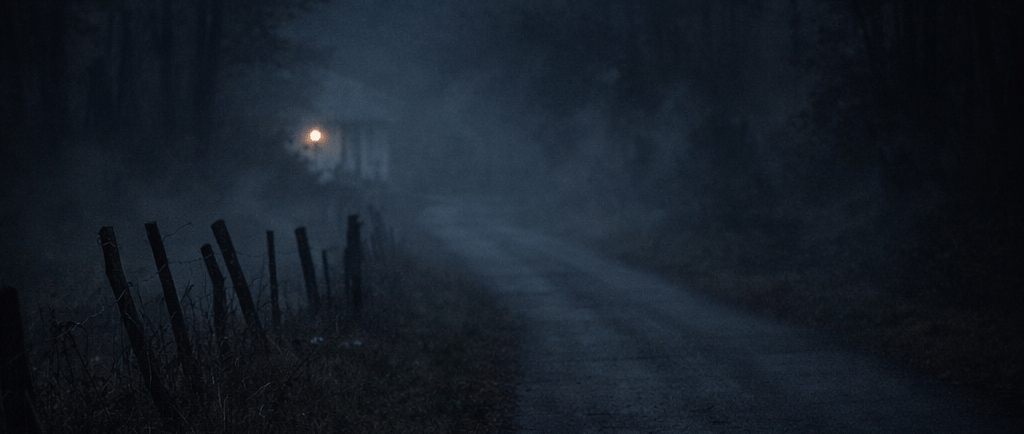
Like something standing just outside the lamp glow.
The mysteries I trust most
I will probably always love ghost stories. I will probably always be drawn to haunted places, old folklore, and the uneasy places where history and mystery overlap. But the beings I trust most, creatively speaking, are the ones that are not overexposed.
The ones that still feel half-hidden.
The ones that have not been flattened by constant retelling.
The ones that leave room for uncertainty.
Maybe that is because mystery works best when some of the door stays closed.
Not every being needs a franchise.
Not every legend needs a jump scare.
Not every strange presence needs to be explained.
Some are more powerful when they remain just barely named.
And maybe that is where the real magic still lives.
Not in what everybody already knows.
But in what still waits, mostly unspoken, at the edge of everyday life.