
Why Appalachia Produces So Many Ghost Legends
Why does Appalachia seem full of ghost stories and haunted legends? Explore how landscape, isolation, history, grief, folklore, and faith shaped the region’s enduring supernatural traditions.
PARANORMAL & MYSTERY
Bobby Owenby
6 min read
There are places in the world where ghost stories feel like entertainment, and then there are places where they feel like memory.
Appalachia belongs to the second category.
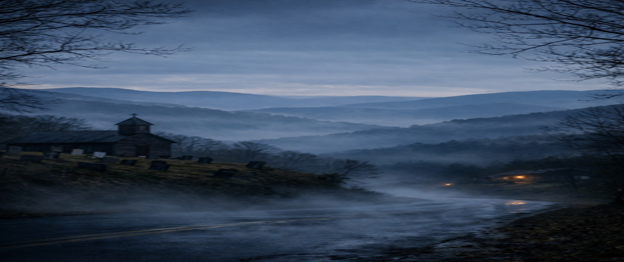
Say the word Appalachia, and many people immediately picture mist moving between mountain ridges, dark woods, winding roads, old churches, family cemeteries, abandoned mines, weathered porches, and stories passed down in low voices after sunset. It is a region that seems to hold onto the past with both hands. And because of that, it has produced an extraordinary number of ghost legends, haunted warnings, death omens, and supernatural tales that still feel alive today.
But why?
Why does Appalachia seem to generate so many ghost stories compared to other regions? Why do its legends feel so rooted, so specific, and so difficult to shake off?
The answer is not just “because the mountains are spooky,” though that certainly helps. The real answer is deeper. Appalachian ghost legends grow out of a powerful mix of landscape, isolation, oral tradition, generational memory, hardship, faith, and the constant feeling that the visible world may not be the only one pressing in around us.
The landscape itself feels haunted
Before a single story is told, Appalachia already looks like the kind of place where stories would be born.
The mountains do something to sound, light, and distance. Fog hides familiar roads. Valleys swallow daylight early. Forests seem endless. A house can sit just over the ridge and still feel impossibly far away. At night, the land changes shape. What felt ordinary in the afternoon can feel ancient after dark.
That matters.
Ghost stories thrive in places where people are constantly reminded that they do not fully control their environment. In Appalachia, the natural world is beautiful, but it has never been entirely tame. The mountains can shelter, isolate, confuse, and intimidate all at once. They create an atmosphere where mystery feels natural. When people live in a place that regularly reminds them how small they are, supernatural explanations do not feel ridiculous. They feel possible.
It is hard to walk through deep mountain fog, hear something call from the woods, and not understand why generations of people believed the land itself could carry warnings.
Isolation helped stories survive
One reason Appalachian ghost legends remain so rich is that many communities were historically isolated from one another. Families lived in hollers, on ridges, and in small towns separated by difficult terrain. Travel was harder. News moved slower. People relied more heavily on family knowledge, community memory, and spoken tradition.
In places where written culture dominates, stories often get flattened into neat versions. In places where oral tradition stays strong, stories stay alive. They change slightly from teller to teller. They gather local detail. They become attached to specific creeks, cemeteries, bridges, cabins, and family names.
That is how legends endure.
A haunted woman is not just “a ghost.” She becomes the woman seen near a certain bend in the road after midnight. A warning spirit is tied to a particular patch of woods. A death omen becomes something your grandmother swore appeared three days before your uncle died. These details make Appalachian ghost stories feel less like fiction and more like inherited testimony.
The story is not distant. It happened near here. Maybe to your people.
Appalachia carries deep historical pain
Ghost legends often grow where grief has had nowhere to go.
Appalachia has a long history of hardship: dangerous labor, poverty, exploitation, mine disasters, floods, disease, family loss, land theft, displacement, violence, and generations of people living close to death without always having justice, explanation, or closure. Any region with that much buried pain is likely to produce stories about the dead lingering, warning, returning, or refusing to rest.
Ghosts often appear where history feels unresolved.
That is one reason Appalachian haunting stories can feel so emotionally heavy. They are not always about cheap scares. Many of them are really about unfinished business. They are about those who were forgotten, cheated, killed too young, buried too fast, silenced, or left behind. In that way, a ghost story can become a second record when the first one was erased.
Sometimes a haunting is really a community refusing to let something disappear.
Folklore in Appalachia is layered, not singular
Another reason Appalachia produces so many supernatural legends is that its folklore comes from many different roots that mixed together over generations.
The region carries influences from Scots-Irish ballad traditions, English and Irish superstitions, Indigenous knowledge and place-based spiritual understanding, African American folklore, folk Christianity, healing traditions, omens, signs, dreams, and warnings passed down inside families. Over time, these influences blended into something distinctively Appalachian.
That mixture creates a worldview where the supernatural is not always treated as fantasy. It can be treated as practical knowledge.
You do not whistle at night.
You do not answer every voice you hear in the woods.
You pay attention to dreams.
You notice signs.
You respect the dead.
You avoid certain places after dark.
You do not assume everything has a rational explanation just because you want one.
Whether a person interprets those beliefs literally, symbolically, or culturally, they help create an atmosphere where ghost legends do more than entertain. They instruct. They warn. They preserve community instincts about danger, boundaries, and reverence.
Oral storytelling stayed personal
Appalachian ghost legends often feel stronger than mass-market horror because they are usually told in a personal register.
Instead of “Here is a made-up scary story,” the tone is often closer to: “This happened to somebody I know,” or “My aunt used to say,” or “You can believe it or not, but my grandfather never lied about what he saw.”
That style matters because it invites belief without demanding it. It leaves room for doubt, but not enough room for dismissal.
The best Appalachian ghost stories rarely sound polished. They sound remembered.
That remembered quality gives them force. A shaky voice on a porch can be more unnerving than any elaborate horror novel because it feels tethered to lived experience. Even when the story grows in the telling, it still carries the weight of family truth.
Faith and the supernatural often live side by side
In Appalachia, strong religious culture and supernatural belief have often existed together rather than in opposition.
From the outside, some people assume religious communities automatically reject ghost stories, omens, signs, or uncanny experiences. In reality, many Appalachian traditions hold a worldview in which the unseen is very real. Angels, devils, spirits, warnings, curses, blessings, visions, and forces beyond ordinary sight may all exist within the same moral universe.
That does not mean every Appalachian person believes the same thing. Far from it. But it does help explain why ghost legends found fertile ground there. In a culture already open to mystery, spiritual conflict, and unseen presence, supernatural stories do not have to fight for relevance. They already make emotional and cultural sense.
The mountains preserve memory
Appalachia produces so many ghost legends because it is a region that remembers.
Families remember.
Land remembers.
Buildings remember.
Roads remember.
Stories remember what official history leaves out.
A ghost legend is often a way of saying: something happened here, and it still matters.
That is why these tales stay powerful even now, in an age of smartphones and satellite maps. Modern technology may explain some strange sounds, missing shadows, or odd lights in the trees, but it cannot explain away the human need to give form to grief, dread, warning, and memory. In Appalachia, ghost stories do not survive because people are naive. They survive because the region understands something modern life often tries to forget: places can feel marked, history can cling, and not every truth arrives in a clean, logical package.
Sometimes the story is the evidence.
Why these legends still resonate today
People are still drawn to Appalachian ghost legends because they offer more than fear. They offer texture. They make the world feel deeper, older, and less settled. They suggest that history is not over, that the dead are not always silent, and that landscape can carry emotion the way a house carries smoke.
They also speak to something many people feel but cannot easily name: the sense that some places are different. Heavier. Stranger. More watchful.
Appalachia has a way of turning that feeling into story.
And maybe that is the real answer.
Appalachia produces so many ghost legends because it is a place where beauty and hardship have lived side by side for generations. Its mountains create mystery. Its history creates grief. Its cultures create story. Its people learned to pass down warnings, signs, and memories in forms that could survive. Over time, those forms became legends.
Not empty legends. Living ones.
The kind that still travel across porches, graveyards, churchyards, ridgelines, family reunions, and late-night roads.
The kind that make you glance into the trees a second time.
The kind that remind you some regions do not just tell ghost stories.
They grow them.